
X

When shopping for engineered hardwood flooring, wear layer thickness is one of the most important specifications to understand. It affects how much real wood sits above the core and can influence whether a floor can be sanded and refinished in the future.
But is a thicker wear layer always better? And how thick should an engineered hardwood wear layer be for your home?
The answer depends on your long-term expectations, the floor's construction, and whether future refinishing is a priority. Understanding this specification can help you make a more informed flooring decision.
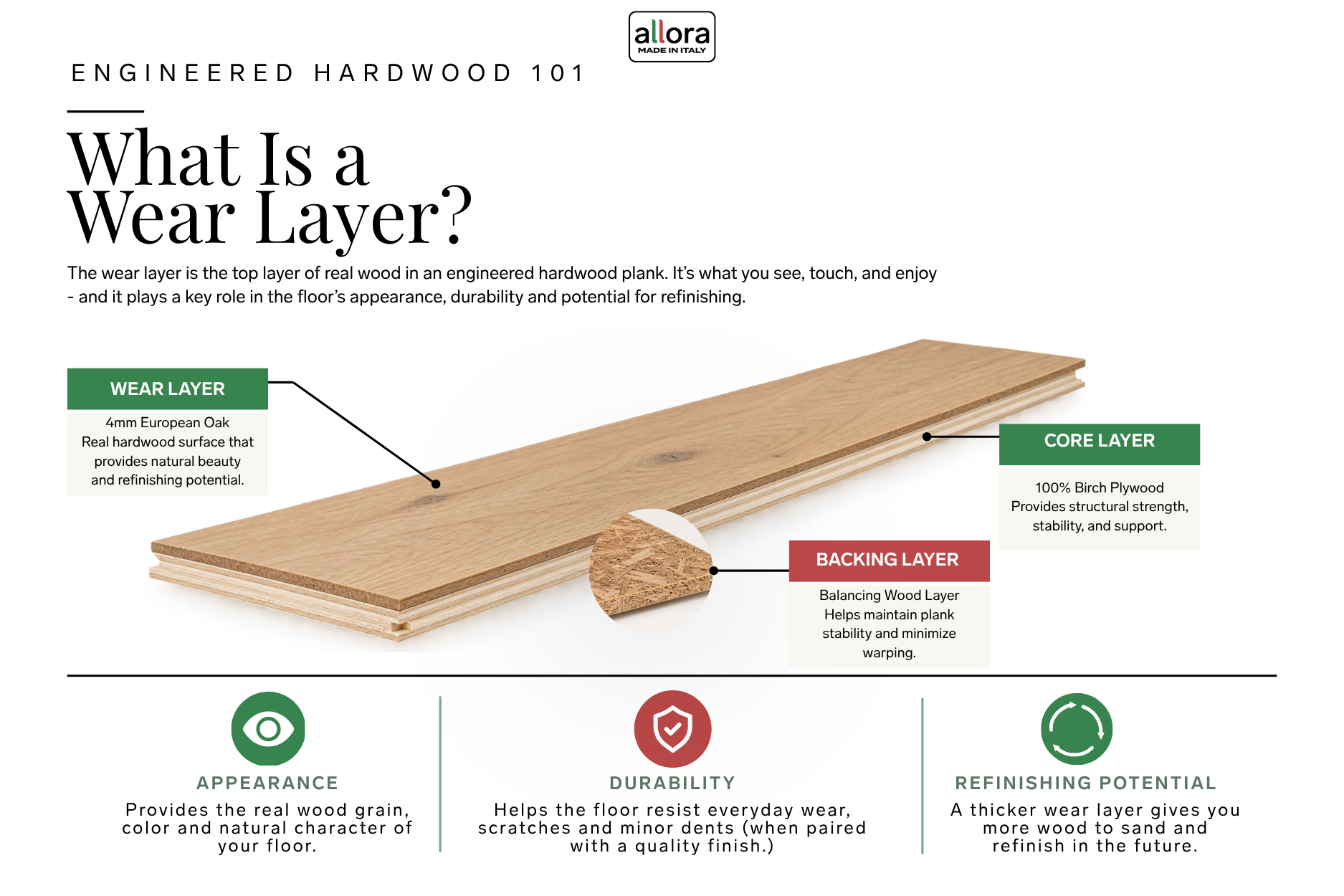
The wear layer is the top layer of real wood in an engineered hardwood plank. It provides the visible wood grain, color, and natural character that define the floor's appearance.
Beneath the wear layer is the engineered core, which is typically constructed from multiple layers of wood or other wood-based materials bonded together. This construction distinguishes engineered hardwood from solid hardwood, which consists of a single piece of wood throughout its thickness.
The wear layer matters because it determines how much real wood is available for potential sanding and refinishing. However, it is only one factor in a floor's overall performance. The factory finish, wood species, core construction, installation, and maintenance all play important roles.
Engineered hardwood wear layers vary by product, with options ranging from relatively thin wood veneers to thicker layers designed to provide greater refinishing potential.
For homeowners who want the option of professional refinishing in the future, a wear layer of approximately 3mm to 4mm or more is worth considering. Thinner wear layers may still be suitable for many applications, particularly when preserving the original factory finish is the priority.
Here is a general guide to common wear layer thicknesses:
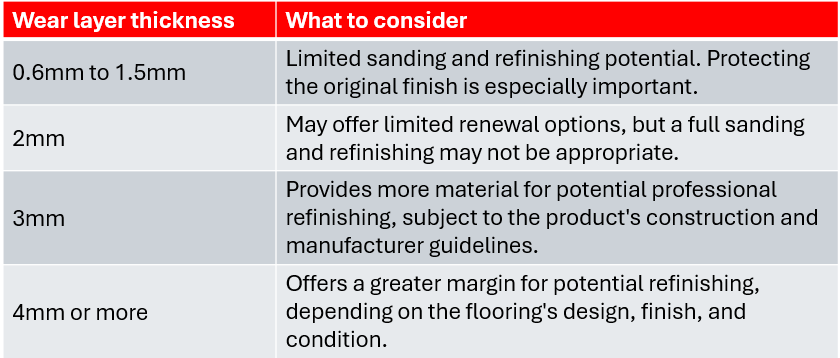
These ranges are general guidelines, not guarantees of how many times a floor can be refinished. Always consult the manufacturer's specifications before making a decision.
For example, the National Wood Flooring Association's voluntary Refinishable Program sets minimum wear layer requirements of 2.5mm for factory-finished smooth wood flooring and 3.2mm for unfinished smooth wood flooring. These requirements provide a useful reference when comparing products, although they do not mean every product meeting a thickness threshold is automatically certified.

A thicker wear layer can provide an important long-term advantage, but thickness alone does not determine a floor's durability.
The wear layer is particularly relevant when evaluating future refinishing options. A thicker layer provides more real wood that may be available for professional sanding, allowing the appearance of the floor to be renewed when appropriate.
Everyday wear, however, is also influenced by the factory finish, the hardness of the wood species, household traffic, pets, furniture movement, and maintenance practices.
For example, a well-maintained engineered hardwood floor with a quality factory finish may perform well for years without requiring refinishing. A thicker wear layer does not make the surface scratch-proof or eliminate the possibility of dents and damage.
When comparing engineered hardwood flooring, consider the complete product specification rather than selecting a floor based on wear layer thickness alone.

Some engineered hardwood floors can be professionally sanded and refinished, but not all products are suitable for this process.
The available options depend on several factors, including:
It is also important to distinguish between recoating and refinishing. Recoating generally involves applying a compatible new finish over a properly prepared existing surface, without sanding down to bare wood. Refinishing typically involves sanding the existing finish and wood surface before applying a new finish.
These are different processes, and the appropriate option depends on the condition and specifications of the floor.
Before purchasing engineered hardwood, ask whether the manufacturer permits sanding and refinishing and whether the product has been evaluated or certified for that purpose.
Total plank thickness and wear layer thickness are two separate specifications.
Total plank thickness measures the entire engineered hardwood board, including the wood surface and the layers beneath it. Wear layer thickness measures only the top layer of real wood.
For example, a 5/8-inch engineered hardwood plank may have a 4mm wear layer. The remaining thickness consists of the engineered core and other construction layers.
A thicker plank does not automatically have a thicker wear layer or greater refinishing potential. Two products with similar overall dimensions can have very different constructions.
When comparing flooring options, look for both measurements on the product specification sheet. This gives you a clearer understanding of how the floor is built and what options may be available over its lifetime.
Wear layer thickness is an important starting point, but it should be considered alongside the other specifications that influence the floor's appearance and performance.
1. Wood species and grade
The wood species influences the floor's natural grain and characteristics, while the grade helps describe the amount of natural variation, knots, and other visual features. European Oak, for example, is available in grades that range from cleaner, more consistent appearances to more character-rich designs.
2. Finish quality
The factory-applied finish helps protect the wood surface from everyday wear. Consider the finish type, recommended care routine, and the manufacturer's guidance for maintaining its appearance.
3. Core construction
The engineered core contributes to the plank's overall construction and dimensional stability. Look at the complete construction rather than relying on one measurement.
4. Installation requirements
Proper subfloor preparation, moisture management, acclimation where required, and installation according to manufacturer instructions are essential to long-term floor performance.
5. Long-term maintenance
Regular cleaning, prompt spill removal, protective furniture pads, and appropriate floor care can help preserve the finish and appearance of hardwood flooring.
By evaluating these factors together, you can choose a floor that fits your design preferences and practical expectations.

For homeowners investing in premium engineered hardwood, wear layer thickness is one way to evaluate the construction and potential long-term flexibility of a floor.
A 4mm wear layer, for example, provides more real wood than a thinner veneer and may offer greater refinishing potential when the product's other specifications and condition permit it. That can be an important consideration for homeowners who want the option of updating their floors in the future rather than replacing them.
Allora engineered European Oak flooring features a 4mm wear layer, alongside its birch core and matte UV lacquer finish. These specifications are worth considering together when evaluating the construction, appearance, and maintenance requirements of a premium engineered hardwood floor.
Ultimately, the best wear layer thickness depends on your priorities. If future refinishing is important, compare products carefully, review their technical specifications, and confirm the manufacturer's recommendations before purchasing.
A wear layer of approximately 3mm to 4mm or more is worth considering if future professional refinishing is a priority. The appropriate thickness depends on the product's construction, finish, and manufacturer guidelines.
A 4mm wear layer provides a substantial layer of real wood and can offer greater potential for future refinishing than thinner veneers. Actual refinishing suitability depends on the complete flooring construction and the manufacturer's recommendations.
Not every engineered hardwood product with a 2mm wear layer is suitable for full sanding and refinishing. The available wood thickness, finish, construction, and manufacturer guidance must be evaluated before attempting the process.
Not necessarily. A thicker wear layer can increase refinishing potential, but everyday durability also depends on the factory finish, wood species, installation quality, and maintenance.
No. Total plank thickness measures the entire board, including the core. Wear layer thickness measures the top layer of real wood, which is the portion relevant to potential sanding and refinishing.
Check the product's technical specifications and maintenance guidelines, and consult the manufacturer or a qualified flooring professional. If refinishing is a priority, look for documented guidance or an applicable refinishability certification before purchasing.
Understanding wear layer thickness helps you compare engineered hardwood flooring beyond its color, grain, and overall dimensions. By considering the wear layer alongside the finish, core construction, installation requirements, and maintenance recommendations, you can make a more informed choice for your home.
Explore Allora engineered European Oak flooring to learn more about its construction, finishes, and available styles, and find an Allora dealer near you.

