
X
Choosing new flooring is a major decision. You want something that looks good, fits your lifestyle, holds up to everyday use, and makes sense for your budget.
With so many options available, many homeowners start with a simple question:
What type of flooring should I buy?
There is no single answer for every home. The right flooring depends on where it will be installed, how the space is used, the look you want, your maintenance preferences, and your budget.
For homeowners who want the natural beauty of real wood, engineered hardwood flooring is one option worth considering. It combines a real hardwood surface with a layered construction that can provide dimensional stability and flexibility for a variety of homes.
Start by considering five things:
For homeowners who want real wood, engineered hardwood offers a combination of natural appearance, design flexibility, and practical construction.
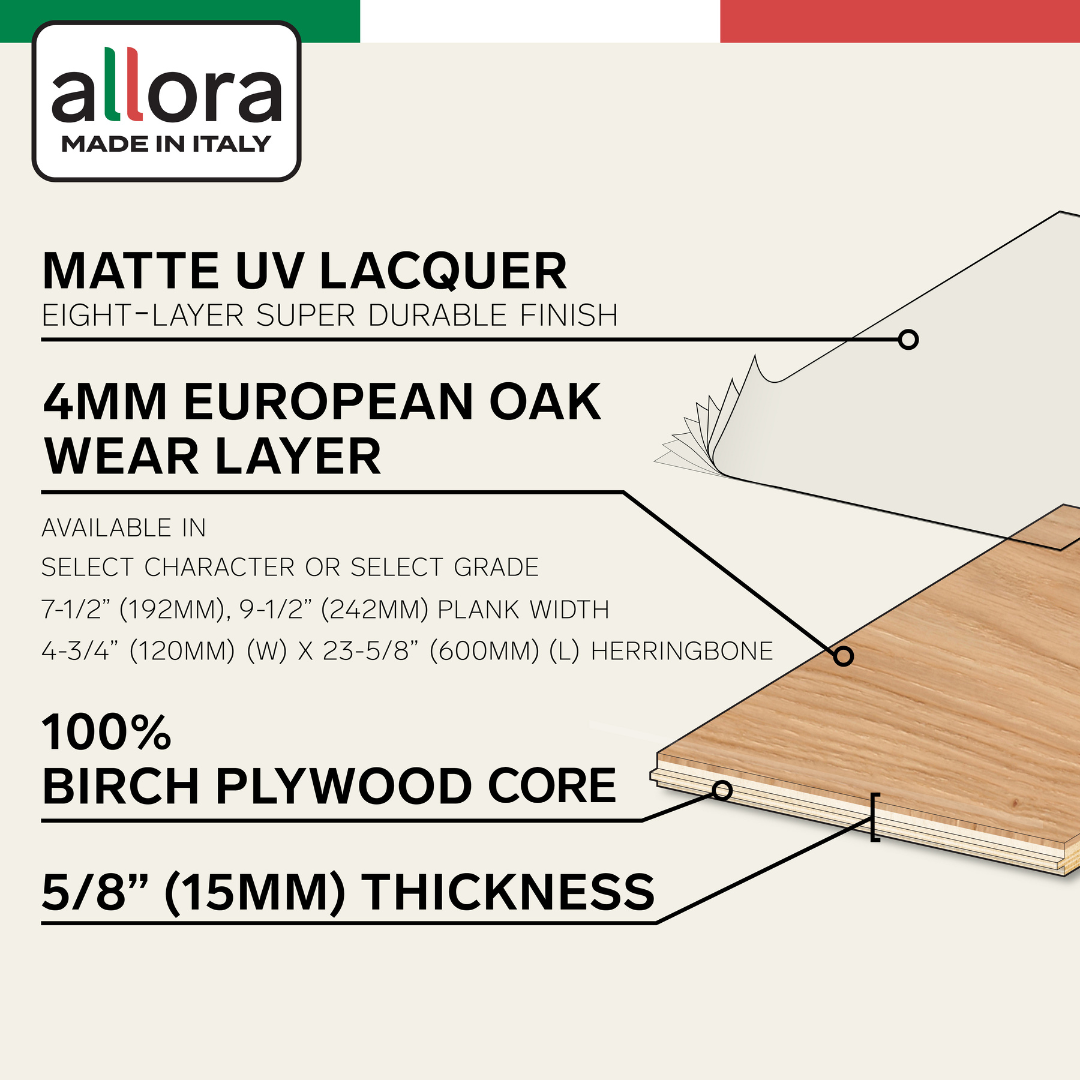
Engineered hardwood is real wood flooring constructed from multiple layers.
The top layer is real hardwood, known as the wear layer, which provides the appearance and character of the floor. Beneath it are layers of wood or other supporting materials that make up the core.
Solid hardwood, by comparison, is made from a single piece of wood.
Engineered hardwood can offer greater dimensional stability than solid hardwood in certain environments, making it a popular choice for modern homes.
Not all engineered hardwood is the same, however. When comparing products, look at:
Both are real wood flooring, but their construction is different.
Solid hardwood is made from one piece of wood and can typically be sanded and refinished multiple times.
Engineered hardwood has a real hardwood wear layer over a layered core. Depending on the product and wear-layer thickness, some engineered floors can also be refinished.
Neither is automatically right for every home. The best choice depends on the specific product, installation environment, and homeowner's priorities.

Living rooms need flooring that can handle everyday traffic while complementing the design of the space.
Engineered hardwood works well because it provides the natural appearance of real wood with a wide range of colors, grades, finishes, and plank widths.
Wide-plank European oak is especially popular in larger living spaces. The wider boards create fewer visual breaks and can give a room a clean, expansive appearance.

Bedrooms generally receive less traffic than kitchens and hallways, giving homeowners more flexibility.
Engineered hardwood can create a warm, natural look and can continue into other areas of the home for a cohesive design.
Lighter oak tones can create an open, relaxed feel, while darker colors can provide a more dramatic look.

Open-concept homes benefit from flooring that visually connects different areas.
Using the same engineered hardwood throughout adjoining living spaces can create a more cohesive appearance and make the overall space feel larger.
Wide-plank flooring can work particularly well in open layouts. When choosing a color, consider your cabinets, walls, furniture, countertops, and natural light.
The lifespan of engineered hardwood depends on its construction, installation, maintenance, and level of traffic.
When comparing products, pay close attention to three areas:
Wear layer: A thicker wear layer provides more real wood at the surface and may allow for refinishing, depending on the product.
Core: The core contributes to the structure and stability of the plank.
Finish: The finish protects the surface and affects both appearance and maintenance.
Quality matters. Two engineered hardwood floors can look similar while having very different constructions.
No flooring can guarantee a specific increase in home value, but flooring can contribute to a home's overall appearance and perceived quality.
Real wood flooring is often desirable because of its natural appearance, longevity, and versatility.
For homeowners thinking about resale, timeless wood colors and styles can also provide flexibility as interior trends change.

Absolutely.
Because the visible surface is real wood, quality engineered hardwood can have the same natural appearance associated with premium hardwood flooring.
The overall look depends on the species, grade, plank width, color, finish, and installation.
European oak is particularly popular in high-end interiors because of its distinctive grain and natural variation. Wide-plank European oak can create a refined appearance without looking overly uniform.
It can be, provided the product is selected for the household's needs.
For busy areas, consider:
A floor with natural variation can also make everyday dust and minor marks less noticeable.
No real wood floor is completely immune to wear. The goal is to choose a product that will continue to look good as your home is lived in.
Engineered hardwood is relatively easy to maintain with regular care.
Typical maintenance includes:
Always follow the manufacturer's specific maintenance recommendations, as care requirements can vary by product and finish.

Engineered hardwood can work well in homes with pets, but no real wood floor is completely scratch-proof.
Pet nails, dirt, moisture, and everyday activity can eventually affect any hardwood surface.
When choosing a floor for a home with pets, consider a durable finish, natural grain and variation, and a color that does not highlight every minor mark.
Rugs, mats, regular nail trimming, and prompt cleanup can also help protect the floor.
Engineered hardwood can be a practical choice for family homes.
Children bring spills, toys, dirt, furniture movement, and plenty of foot traffic. When choosing flooring, consider the product's finish, construction, color, and expected level of use.
A naturally varied wood surface can also help everyday signs of life blend into the overall appearance.
For an active household, think beyond simply choosing the hardest flooring available.
Consider where traffic is concentrated, whether you have children or pets, how often you entertain, and how much maintenance you want to do.
A well-constructed engineered hardwood can provide a real wood surface with a layered construction designed for modern homes.
Proper installation and maintenance are equally important to long-term performance.

Yes. Engineered hardwood can be an excellent option for luxury homes.
Luxury flooring is about more than price. Quality materials, thoughtful design, refined finishing, plank proportions, and professional installation all contribute to the final result.
European oak has become especially popular in luxury interiors because of its natural character and versatility.
European oak can be an excellent choice for homeowners looking for high-end engineered hardwood.
Its distinctive grain and natural variation work across contemporary, transitional, traditional, and other interior styles.
European oak can also be finished in a wide range of colors, making it easy to find a look that complements the rest of the home.
However, the term "European oak" alone does not determine quality.
When comparing European oak flooring, look at the entire construction, including:
Don't choose engineered hardwood based solely on color or price.
The wear layer is the real hardwood surface. Its thickness is an important factor when comparing products.
The core contributes to the plank's structure and dimensional stability.
The finish protects the surface while influencing its appearance and maintenance requirements.
Grade affects the amount of natural variation, knots, mineral streaks, and character visible in the finished floor.
Wider planks can create a more open, expansive appearance, particularly in larger rooms.
Environmental and indoor air quality certifications can provide additional information about how a flooring product is manufactured and tested.
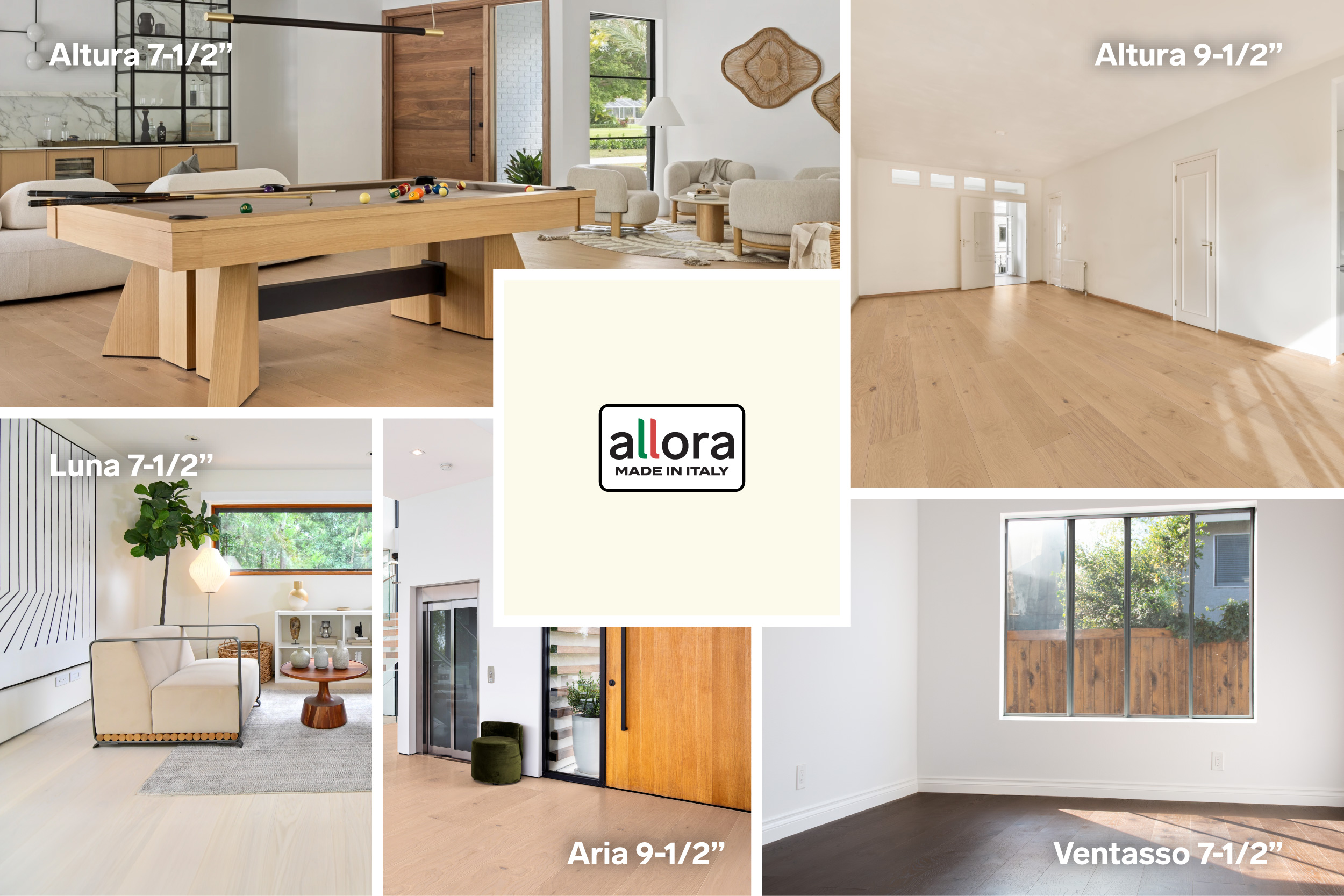
Allora is an engineered European oak flooring collection designed for homeowners and designers looking for real wood with a refined, high-end appearance.
Allora features:
✅ 5/8-inch overall thickness
✅ 4mm real hardwood wear layer
✅ Birch core
✅ Eight-layer water-based matte UV lacquer
✅ Select and Select Character grades
✅ CARB Phase 2 compliance
✅ Eurofins Indoor Air Comfort Gold certification
The collection is available in a range of colors and styles, giving homeowners flexibility across different interior designs.
The goal is not simply to offer a beautiful floor. Allora combines European oak with the construction and specifications homeowners should consider when evaluating engineered hardwood.
For many homeowners, engineered hardwood can be worth the investment because it combines the natural appearance of real wood with a construction designed for modern homes.
That does not make it the right choice for everyone. If your priority is the lowest possible upfront cost, another flooring material may be a better fit.
If you value real wood, long-term appeal, design flexibility, and quality construction, engineered hardwood can provide strong value.
When comparing floors, look beyond the price per square foot. Consider the:
The least expensive floor is not always the best value, and the most expensive floor is not automatically the best choice.
If you're considering engineered hardwood, start with these five questions:
1. How do I use my home?
Consider traffic, pets, children, and entertaining.
2. What look do I want?
Think about your architecture, cabinets, furniture, walls, and natural light.
3. What construction do I need?
Compare the wear layer, core, overall thickness, and finish.
4. How much maintenance am I comfortable with?
Understand the product's cleaning and maintenance requirements.
5. What am I getting for the price?
Compare the complete product rather than focusing only on cost per square foot.
There is no single flooring material that is right for every homeowner.
For those who want the natural beauty of real wood, engineered hardwood is a versatile option that can work across a wide range of homes and lifestyles.
European oak offers another advantage: distinctive grain, natural character, and a refined appearance that works particularly well in high-end interiors.
Allora brings those qualities together with engineered construction, European oak, a 4mm wear layer, birch core, matte UV lacquer finish, and a range of colors and grade options.
Ultimately, the right floor is the one that fits your home, your lifestyle, and the way you want your space to look for years to come.
Explore the Allora collection and find an Allora dealer near you.

